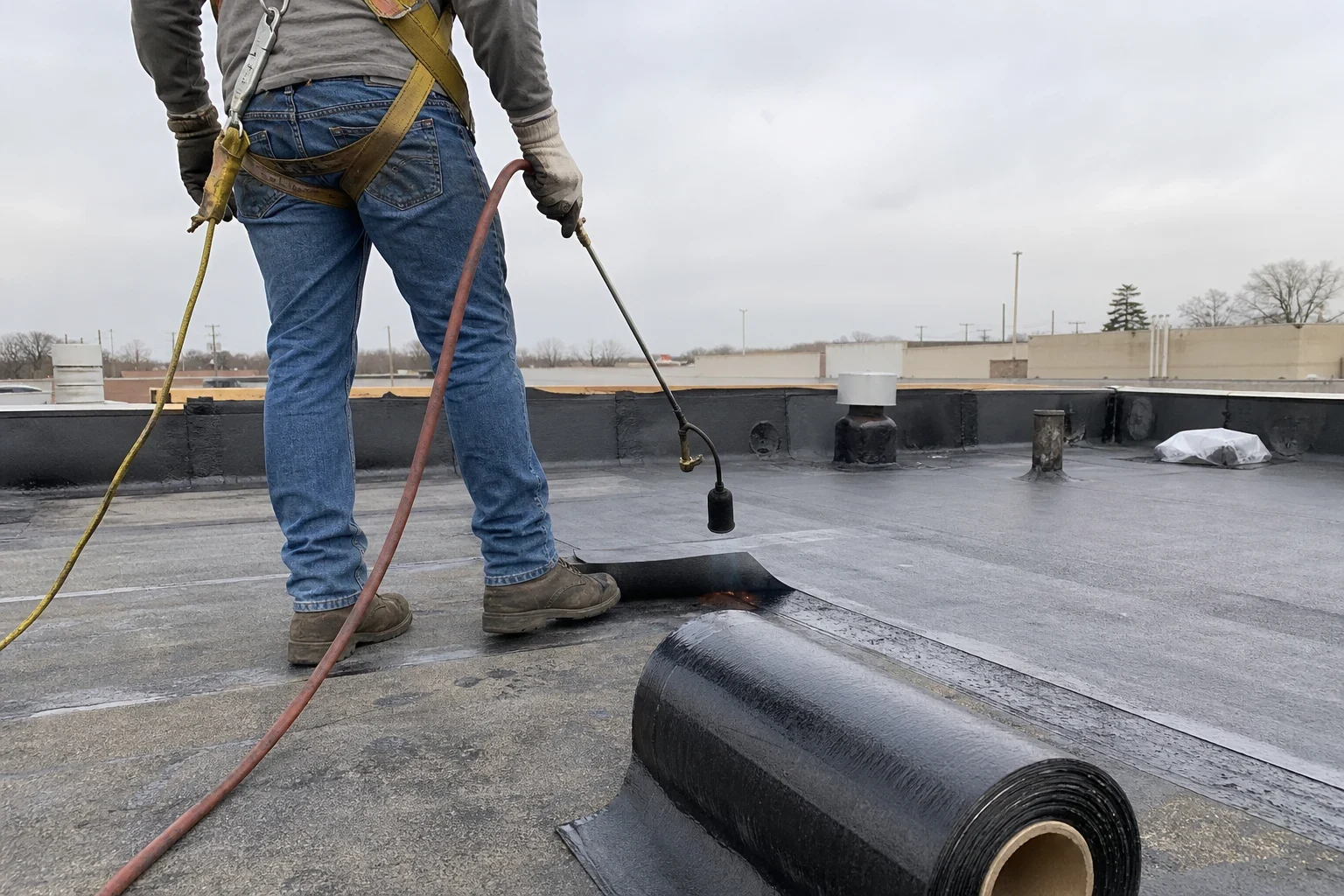
ServicesCommercial Roof Replacement
Commercial Roof Replacement in Seminole, OK
When the flat or low-slope roof on your building is past patching, we strip it to the deck, fix what's underneath and install a new system you can keep up for years. We plan the work in sections so your business keeps running.
Replace it once, then keep it up
Most commercial roofs don't fail all at once. Seams open, flashing pulls loose at the parapet, and water reaches the insulation long before it drips onto a shelf. By the time stains show inside, the boards under the membrane can be soaked across a big section of roof.
Our first job is to tell you straight whether that roof still has years left with repair, or whether replacing it costs less over time. If commercial roof repair will carry it, we say so. If the insulation is wet and the membrane is brittle, a new roof is the better spend, and we build it so routine checks and small fixes keep it going.
Our crew brings over 20 years of combined roofing experience to your building. We hold an Oklahoma commercial roofing license, and we carry an Oklahoma general contractor license too. We work on buildings in Seminole and nearby towns like Wewoka, Shawnee and Tecumseh.
What the job covers
Moisture check before we bid
We take core cuts and walk the whole roof to find wet insulation. That tells us whether a full tear-off is needed or whether part of the old roof can stay under a recover, where code allows it.
Tear-off and deck repair
We remove the old membrane and soaked insulation down to the deck. Rusted metal deck or rotted wood gets replaced before anything new goes down.
Insulation and better drainage
Ponding water shortens the life of any flat roof. Where water sits, we use tapered insulation or crickets to move it toward drains and scuppers.
The right roof for the building
Your new roof might be TPO, EPDM, modified bitumen or metal. The choice depends on slope, the structure and how often people walk up there to service equipment. We lay out the pros and cons of each without the jargon.
Flashing, edges and drains
Most leaks start at the edges, not in the open field. We redo parapet flashing, curbs around rooftop units, pipe boots, edge metal and drains, and tie in gutters and downspouts where the building has them.
Cleanup and an upkeep list
We clear debris and nails from the roof and the lot. You get photos of the finished roof and a short list of what to check each spring and fall.
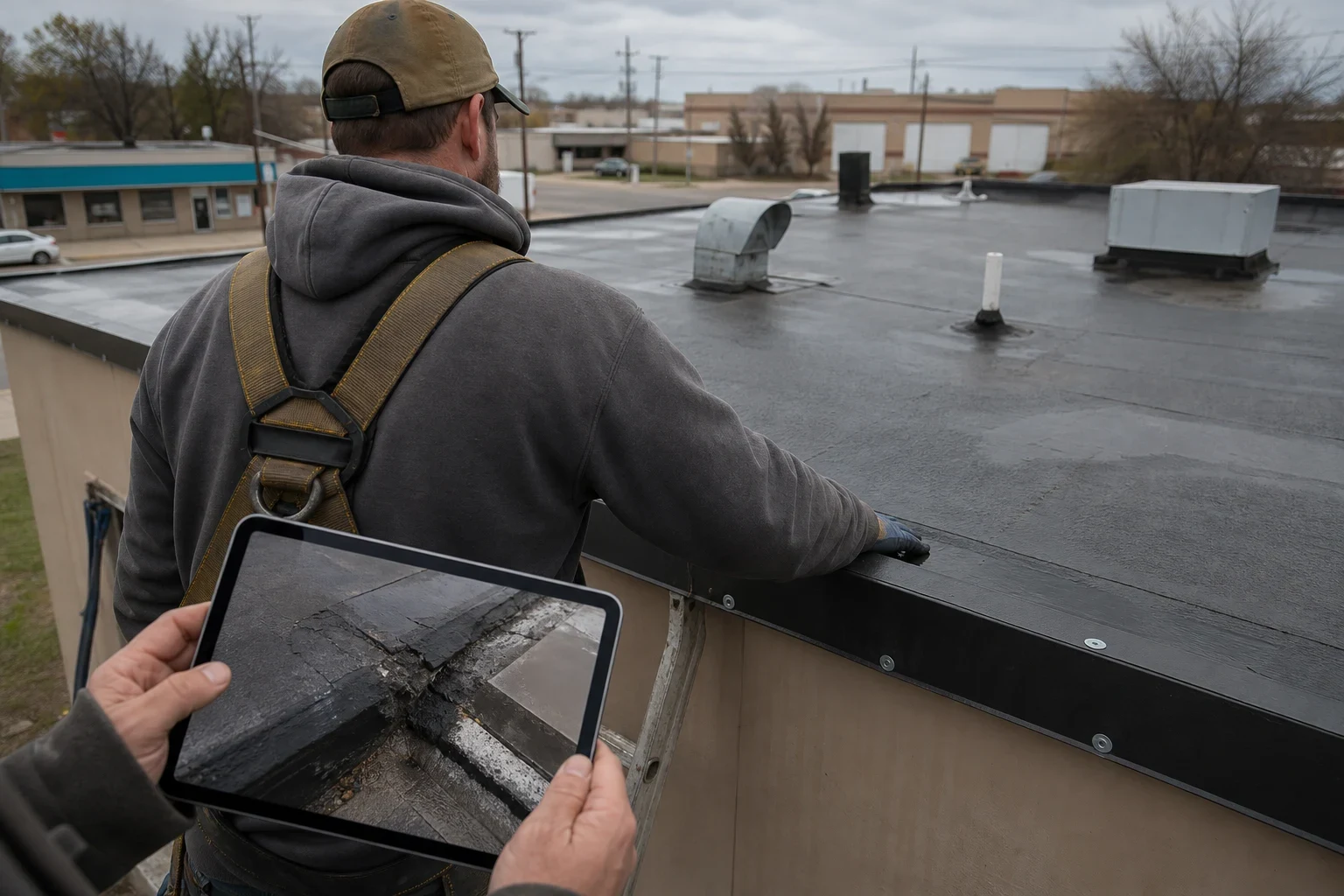
Signs your commercial roof needs replacing
- Leaks in more than one spot
- One leak is usually a repair. Several leaks in different areas, or leaks that come back after patching, point to a membrane that has worn out.
- Water that sits for days
- If puddles are still there two days after a rain, the roof has lost its slope or the deck has sagged. Standing water breaks down seams and adds weight the structure wasn't built to hold.
- Areas that sink when you step
- A patch of roof that feels soft or squishy underfoot means water has soaked the insulation. Sealed under the membrane, it has no way to dry, and over time it rots the deck below.
- Cracked, shrunk or blistered membrane
- Oklahoma summer heat and winter cold make a roof swell and shrink hard every year. Old EPDM pulls away at the edges, and built-up roofs blister and split.
- Hail on an aging roof
- After a hailstorm, an older roof often can't be patched cleanly. Our storm damage repair page covers what we look for first.
How a replacement runs
- 1
Walk the roof and test it
We look over the roof, check the deck from inside where we can and take core samples. Then we show you pictures of each problem spot and hand you an estimate that lists every part of the job on paper.
- 2
Pick the system and pull the permit
We go over membrane options, insulation and any drainage changes. We pull the building permit and handle the inspections it calls for.
- 3
Plan around your business
We talk through deliveries, parking, noise and roof access before day one. We break the roof into smaller pieces and finish one before we open up the next.
- 4
Tear off only what we can cover
Each day we remove only what we can dry in by evening. The open area is sealed every night, so a pop-up storm doesn't reach your inventory or equipment.
- 5
Final walk and handoff
We walk the finished roof with you and run water through the drains. Then we hand over photos and the upkeep list.
What drives the cost
No two commercial roofs price the same, so we don't give numbers before we've been on yours. Your estimate breaks out each part of the job line by line. These are the things that move it most.
- Size and layout
- Square footage matters, but so do parapets, rooftop units, skylights and pipe penetrations. Every one needs its own flashing.
- What's under the membrane
- Wet insulation and damaged deck add material and labor. Core cuts show us this before we bid, so it isn't a surprise halfway through.
- Tear-off or recover
- A building with two old roofs already on it needs a full tear-off. One layer in decent shape may allow a recover, which costs less.
- Materials you choose
- Membrane type and thickness, insulation value and tapered drainage all change the price. Thicker material usually lasts longer between repairs.
- Access and timing
- Tall buildings may need a crane or lift to get material up. Working in small sections or after hours adds time.
Questions business owners ask
- Does my business have to close while the new roof goes on?
- Usually not. We take the roof off a piece at a time and seal each piece before we leave for the day. Before we start, we'll go over noise, parking and any spots inside you may want covered.
- How do I know if repair is enough?
- It comes down to how much water is in the roof. If the wet areas are small and the membrane is still flexible, repair makes more sense. If the core cuts show wet insulation across large areas, patching just buys a little time.
- How long does a commercial roof replacement take?
- Size, the number of layers coming off, deck repairs and rain all play a part. Your estimate comes with a planned start and finish. If weather costs us a day, we call and tell you how the schedule shifts.
- Which roof system is right for our building?
- TPO and EPDM are common on flat roofs and hold up well with routine care. Modified bitumen takes foot traffic well around rooftop equipment. Metal works on buildings with enough slope. We'll recommend one and tell you why.
- Will insurance cover a new roof after hail?
- Sometimes, if the damage is from a covered storm and not age. We document what we find with photos and measurements you can give your carrier. The adjuster decides what's covered, not us.
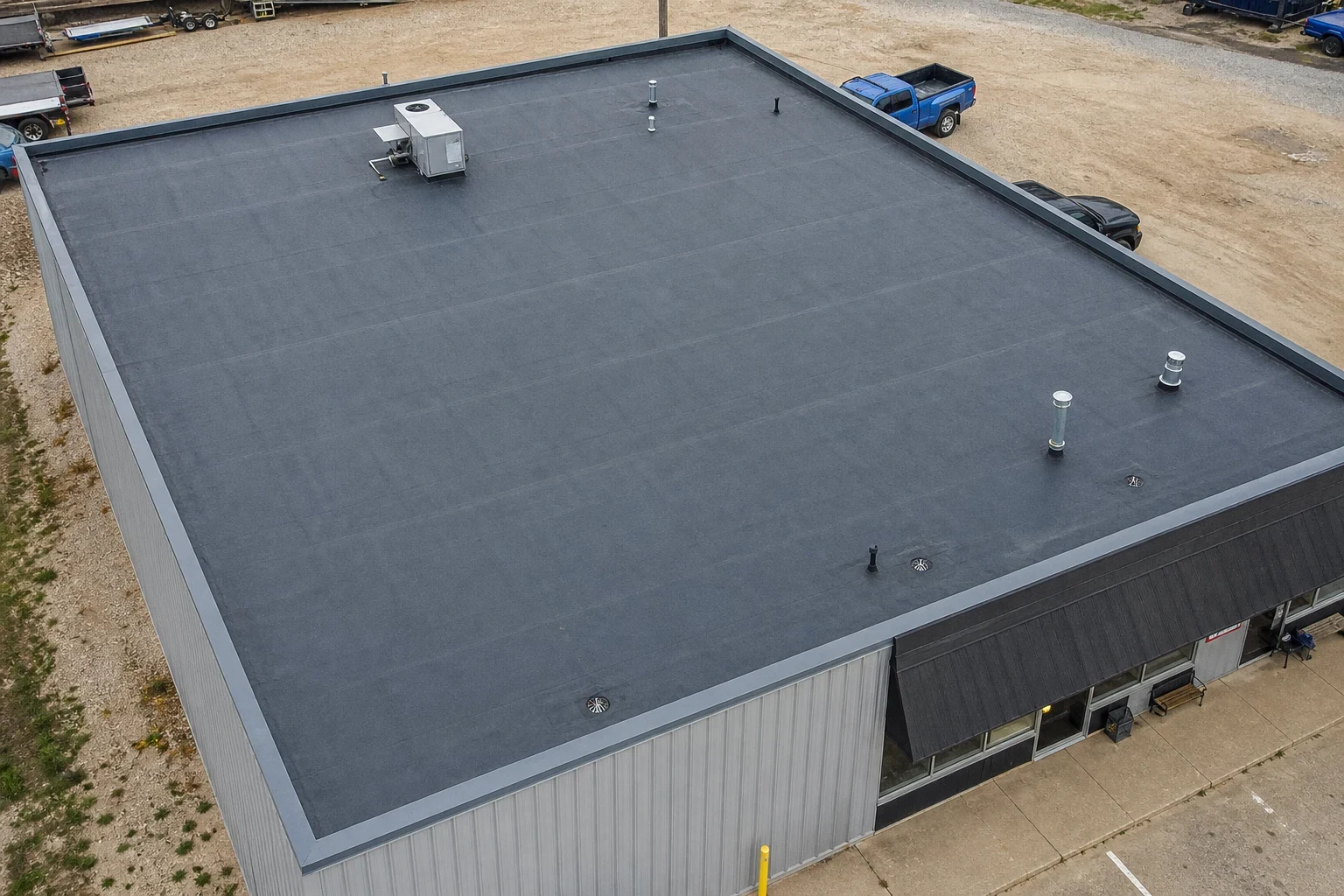
Find out what your building's roof really needs
We'll get on the roof, check what's under the membrane and tell you whether it's repair or replacement. Either way, you'll know what keeping it up looks like from here.